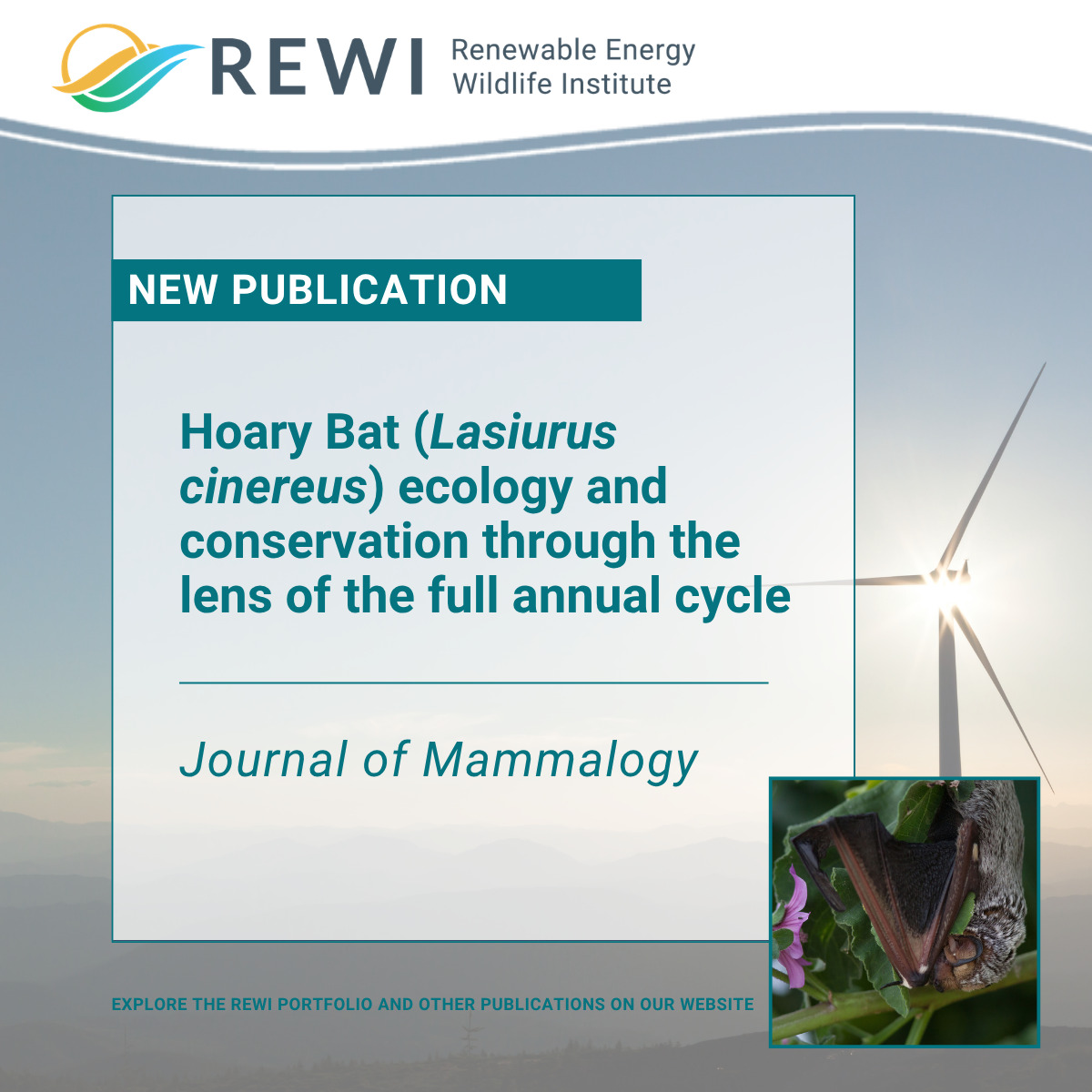
The hoary bat is just one example of the conservation priorities the Renewable Energy Wildlife Institute (REWI) looks to address. While this relatively common migratory tree bat ranges widely across North America and is unaffected by the white-nose syndrome that threatens many other North American bat species, the frequency that hoary bats appear in post-construction fatality surveys has some wildlife managers concerned about the effect wind energy development may have on hoary bat population stability. Turning off turbines when bats are active can reduce risks to hoary bats but also reduces the clean energy each wind project can send to the grid—creating quite the conundrum for conservation experts interested in mitigating impacts of climate change. To help inform future conservation management decisions around this challenge, REWI convened a team of experts to summarize what we know about hoary bats and their relationship to wind energy development (and other conservation challenges), so decision-makers can tackle the problem from the same solid knowledge base. We’re happy to finally share the fruits of this collaborative effort, authored by REWI’s Wind-Wildlife Program Lead, Dr. Shilo Felton, Ted Weller, Dr. Amanda Hale, Dr. Winifred Frick, Dr. Kristin Jonnasson, Dr. Jeff Clerc, Dr. Cris Hein, Dr. Erin Baerwald, and REWI’s Director of Research and Programs, Dr. Eric Schauber, published in the Journal of Mammalogy.
Read the full article Hoary Bat (Lasiurus cinereus) ecology and conservation through the lens of the full annual cycle in the Journal of Mammalogy.